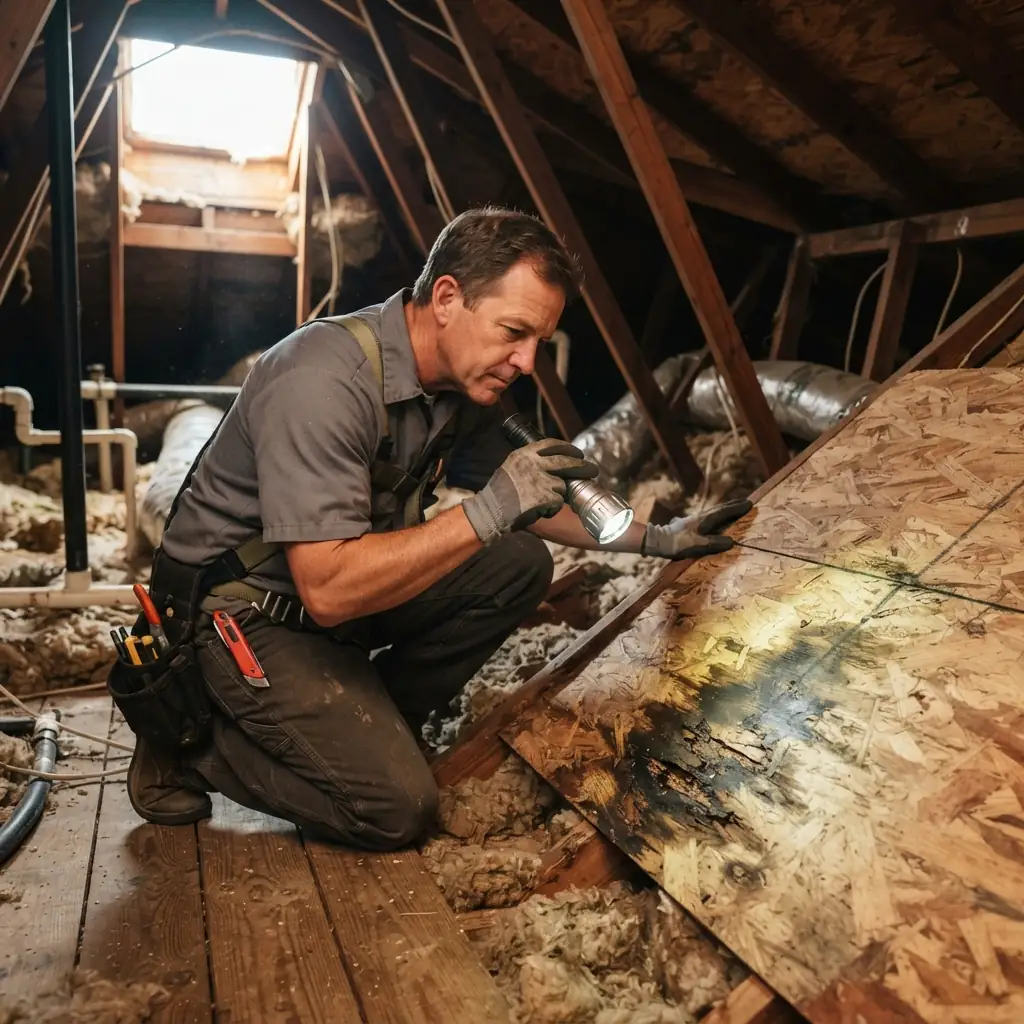
Attic mold often stays hidden until someone goes up for another reason, like a roof inspection, a new AC line or a home sale. In Lakeland, attics get very hot and can trap humid air, and a small roof leak can feed mold on the decking for a long time before a ceiling stain appears below. We connect you with an independent provider who can sort out the cause and the cleanup.
Common Causes of Attic Mold
Most attic mold traces back to one of a few sources. A roof leak around flashing, vents or damaged shingles lets rain soak the decking. Bathroom or kitchen fans that exhaust into the attic instead of outside dump warm, wet air under the roof. Blocked soffit vents or too little ventilation keep humid air trapped. And AC ducts or air handlers in the attic can sweat or leak condensate.
The pattern of the growth often points to the cause. Growth around a single spot suggests a leak. Even growth across the north side of the roof or near the eaves suggests ventilation. A provider will look for these clues before recommending a fix.
Cleaning Roof Decking and Rafters
Roof decking is usually plywood or OSB, and rafters or trusses are solid lumber. If the wood is sound, mold on it can often be cleaned in place by HEPA vacuuming, wire brushing or soda or dry ice blasting, followed by drying. Decking that is soft, delaminated or rotted needs replacement, which may mean a roofer.
Because attics are hot and tight, the work is planned for safety. Containment keeps dust and spores from falling through ceiling openings, and air filtration runs while the cleaning is done. The provider should explain which method they intend to use and why.
Insulation and the Roof Repair
Insulation that has been wet or has mold growing in it generally comes out. Blown-in insulation is vacuumed out and bagged; batts are removed by hand. New insulation goes in only after the decking is clean, the cause is fixed and everything is dry.
Order matters. If a roof leak caused the mold, the roof repair should happen first or at the same time, so new insulation is not soaked again by the next storm. Ask how the provider coordinates with a roofer, and get the roof repair quoted separately from the mold work.
Planning Attic Mold Work
If you have spotted stains on the ceiling or dark patches on the decking, note where they are and whether they get worse after rain. Check whether your bathroom fans vent outside. Share any recent roof work. With that, a provider can decide where to look first and give you a plan that covers cleanup, insulation and the fix.