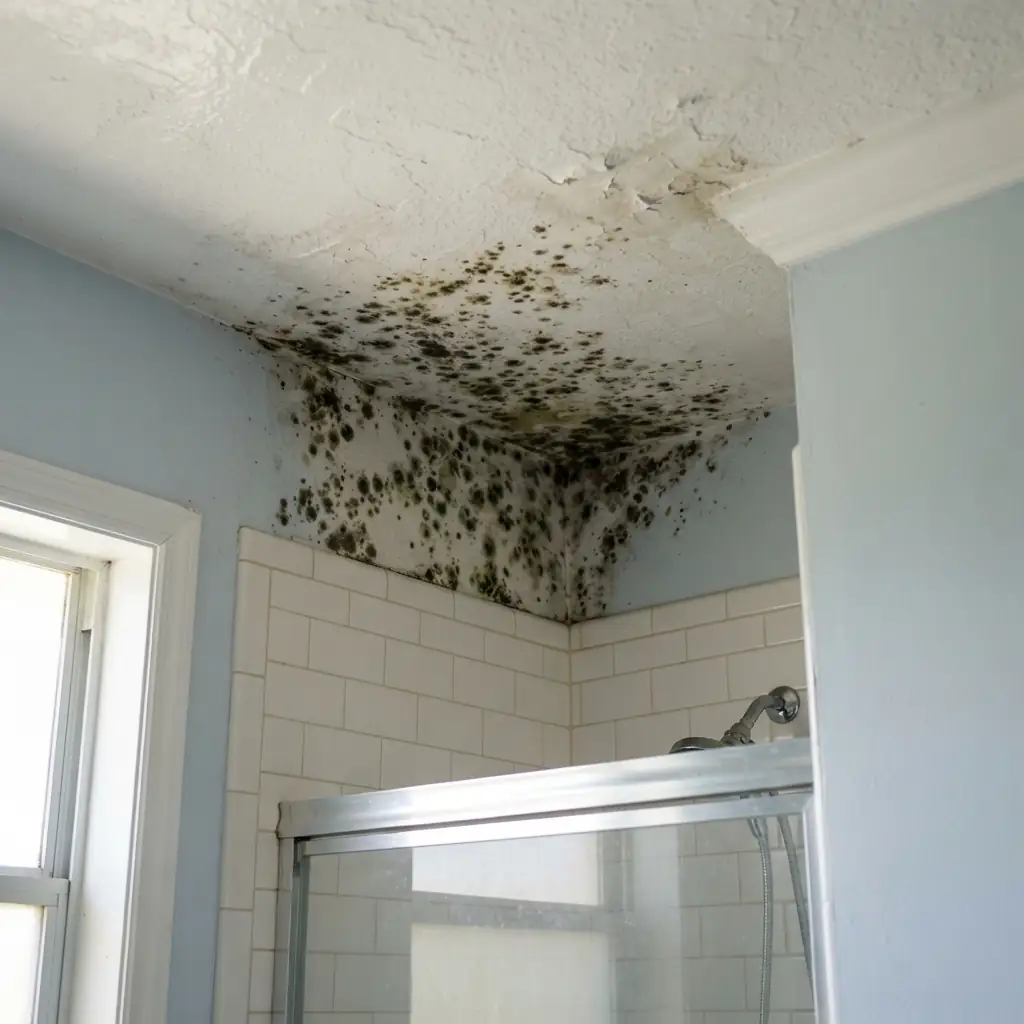
Every bathroom gets some mildew on grout or caulk. The question is when it becomes more than a cleaning chore. Mold that returns days after scrubbing, spreads onto the ceiling or drywall, or comes with soft spots and loose tile usually points to a leak or a ventilation problem. We connect Lakeland homeowners with an independent provider who can find the cause and remove the hidden growth.
Surface Mildew or a Bigger Problem
Surface mildew sits on top of grout, caulk and painted surfaces and wipes away with a bathroom cleaner. Signs that the problem goes deeper include:
- Mold that comes back within days of cleaning
- Dark spots spreading across the ceiling above the shower
- Paint bubbling or peeling on walls next to the tub
- Soft drywall, loose tile or cracked grout lines
- A musty smell that lingers after the room dries
Any of these means moisture is getting into the wall, floor or ceiling, not just sitting on the surface.
Fans, Humidity and Ceiling Mold
A shower puts a lot of water vapor into a small room. In Lakeland's humid climate, that moisture has nowhere to go unless an exhaust fan pulls it outside. Fans that are undersized, clogged, not run long enough or ducted into the attic leave the ceiling damp after every shower, and mold follows.
Fixing ventilation is often part of the plan. That may mean cleaning or replacing the fan, running the duct to the outside or adding a timer so it keeps running after the shower ends. Ceiling drywall that has mold growing into it is removed and replaced once the ventilation is sorted.
Leaks Behind Tile and Under the Floor
A failed shower pan, a cracked grout line, a loose valve or a slow drain leak can soak the wall cavity or subfloor for months while the tile face looks fine. When mold shows up at the base of the wall, outside the tub or across the ceiling of the room below, a hidden leak is the likely cause.
Removing that mold usually means opening the wall or floor under containment, removing wet drywall and backer, cleaning and drying the framing and fixing the leak. Tile replacement and plumbing repair may be separate trades. Ask the provider to list what they will open, what they will clean and who will rebuild.
Planning Bathroom Mold Work
Note where the mold keeps coming back, whether the fan vents outdoors and how long it runs. Look for loose tile, soft spots or stains on the ceiling under the bathroom. Share any past plumbing repairs. That gives a provider enough to decide whether you need a leak check, a ventilation fix, a remediation or all three.