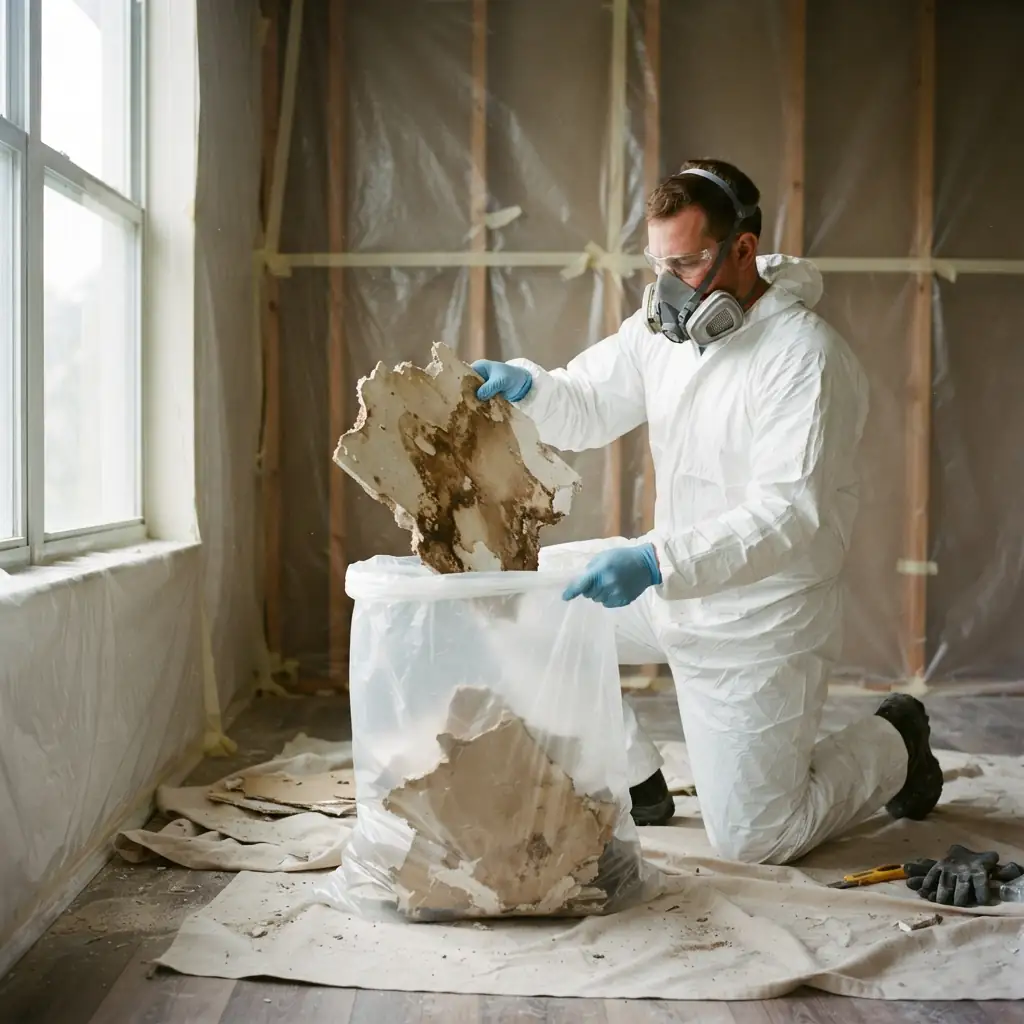
Mold removal in Lakeland usually starts with a question: how far does it go? A stain on a closet wall can be a small patch or the edge of a much larger problem behind the drywall. We connect you with an independent local provider who looks at the whole picture, finds the water that fed the growth and lays out a written plan before any material comes out.
What a Removal Job Usually Includes
Most removal jobs follow the same broad order, even though every house is different. The provider inspects the affected rooms, takes moisture readings and decides where the clean edge of the job will be. The work area is closed off with plastic sheeting to stop spores from reaching other rooms.
- Moisture readings on walls, floors and framing around the visible growth
- Containment with sheeting, sealed vents and a filtered air machine
- Removal of porous material that cleaning cannot save, like soaked drywall or carpet pad
- HEPA vacuuming and cleaning of the framing and hard surfaces that stay
When the cleanup is done, the area is checked again before new drywall or flooring goes in. Skipping that check is how mold ends up sealed inside a freshly painted wall.
Why the Moisture Source Comes First
Mold needs water, and in a Polk County home the water often comes from more than one place. A slow plumbing drip, a condensate line from the air handler, a roof flashing gap or plain summer humidity can all keep a wall damp enough to grow mold. If the source is not found, the same spot tends to come back within a season.
A good provider will tell you what they think caused the growth and what needs to change. Some fixes are simple, such as clearing an AC drain line or adding a bathroom fan. Others, like a roof leak or a failed shower pan, may need a roofer or plumber. Mold removal and the repair of the cause are separate trades, so expect the provider to say which parts they handle and which parts belong to someone else.
Removal Versus Simple Cleaning
Not every spot of mold needs a crew. Florida's mold rules treat jobs over 10 square feet differently, and the EPA suggests that a homeowner can often clean a small patch on a hard surface with detergent and water. Larger patches, growth inside walls or ducts, and mold after sewage or flood water are a different matter.
A provider can help you decide which side of that line your situation falls on. If it is small and surface-level, you may only need advice on cleaning and drying. If it covers a larger area, keeps returning or has a musty odor with no clear source, a full removal with containment is the safer path. Either way, you get a straight answer before anyone talks about price.
Planning Mold Removal in Lakeland
Start by writing down where you see or smell the mold and when it first showed up. Note any leaks, storms or plumbing repairs in the last year. When you call, that history helps the provider decide what to inspect first. From there you should receive a written scope that lists the rooms, the materials coming out, the moisture fix and how the area will be checked at the end.