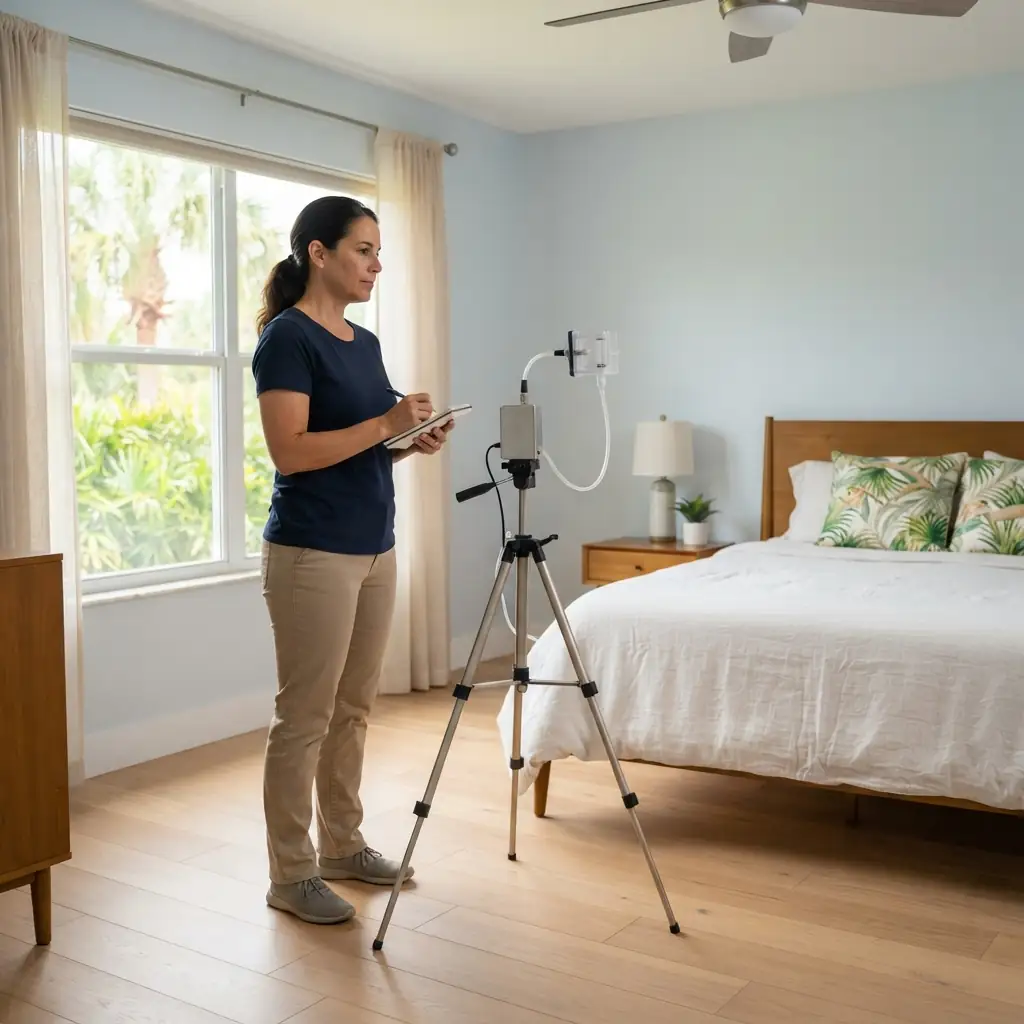
Testing answers specific questions: is there hidden mold, what kind is it, and is the air inside different from the air outside? It is most useful when there is a mold smell you cannot see it, after water damage, before buying a home or after remediation. We connect Lakeland homeowners with an independent provider for mold testing and explain what each type of sample can and cannot show.
When Testing Is Worth Doing
If you can already see a large patch of mold, testing it rarely changes the plan; it needs to be removed and the water source fixed. Testing earns its cost in other situations:
- A musty odor with no growth in sight
- Water damage where the inside of walls or ceilings could be affected
- A home purchase, where you want a baseline before closing
- After remediation, to confirm the area is back to normal
- A health concern your doctor has asked you to look into
A test should follow an inspection. Sampling without first looking for moisture and growth can miss the problem entirely or produce numbers that are hard to interpret.
Air Samples, Surface Samples and What They Show
Air samples are collected with a pump that pulls a measured amount of air through a spore trap cassette. The lab counts and identifies the spores. An outdoor sample is almost always taken at the same time, because Central Florida air carries plenty of mold spores on its own, and the comparison is what matters.
Surface samples use tape lifts or swabs on a visible spot. They tell you whether a stain is mold and what type, but not how much is in the air. Some providers also use wall cavity samples, taken through a small hole, to check behind drywall. A good test plan uses the type of sample that matches the question you are asking.
Who Reads the Results
In Florida, a mold assessment, which includes sampling and evaluating the data, is performed by a mold assessor who holds a state license from the Department of Business and Professional Regulation. The state treats assessors and remediators as separate license types, and a remediator may not assess a home its company remediated in the past 12 months.
The lab report alone is a page of spore counts. The value is in the interpretation: comparing indoor and outdoor counts, flagging species that suggest water damage and tying the findings back to what was seen during the inspection. Ask the provider to walk you through the report and to put any recommendations in writing.
Getting a Useful Mold Test
Before testing, write down what prompted it: a smell, a stain, a leak, a purchase or a health question. Share that with the provider so the samples are taken in the right places. Keep windows and doors in their normal state the day before so the indoor readings reflect everyday conditions. Then ask for a written summary, not just the lab sheet.