Most people picture mold removal as someone scrubbing a wall. In a Lakeland home, the real job starts well before any cleaning and ends after the last fan is shut off. Knowing the steps helps you read a proposal, ask better questions and spot a shortcut before it costs you a second cleanup.
Official source
The EPA explains why controlling moisture is the key to controlling mold in A Brief Guide to Mold, Moisture and Your Home.
How long does mold removal take in a typical Lakeland home?
Small jobs can wrap up in a day, while a whole room often takes several days once drying is included. The cleanup itself is usually quick; the drying is what sets the schedule. Your provider should give you an estimated timeline after the inspection and update it based on moisture readings.
Related service >>
- Mold Removal in Lakeland, FL
Step One Is Always the Water
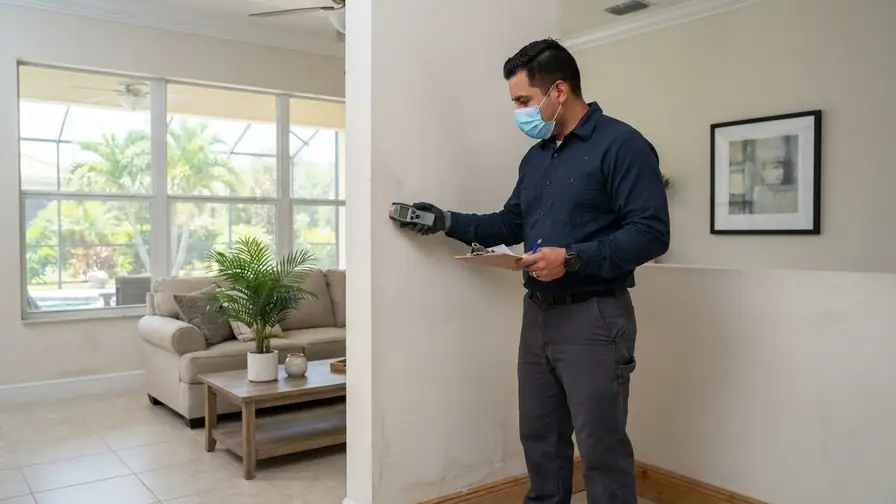
Mold needs moisture, so a removal job that skips the source is only cosmetic. The provider starts with a moisture meter and, in many cases, a thermal camera, tracing damp spots back to where the water comes from. In Lakeland that is usually a roof leak after a summer storm, a sweating AC line in a closet, a slow leak under a sink or humid air getting into a closed-up room.
Write down what they find. If the cause is a plumbing or roofing problem, you may need a separate trade to fix it before or during the mold work. A good plan names that repair and puts it in the right order, so new drywall does not go up over a leak that is still active.
Containment Keeps the Rest of the House Clean
Once the source is known, the work area gets sealed off. Crews hang plastic sheeting from floor to ceiling, tape the seams and cover vents so spores do not travel through the ductwork. A HEPA air scrubber draws air out of the space and filters it, keeping slight negative pressure so air moves into the work zone and not out of it.
The size of the containment should match the job. A small patch behind a vanity may only need a mini enclosure, while a whole room needs a full barrier with a zippered door. Ask how big the containment will be and where the air scrubber will exhaust. Those two answers tell you a lot about how careful the crew plans to be.
Removal, Cleaning and Drying
Porous materials with growth, such as drywall, carpet pad, ceiling tiles and insulation, are cut out, bagged inside the containment and carried out sealed. Solid surfaces like studs and subfloor are cleaned, often by HEPA vacuuming and wiping, and sometimes sanded where growth has stained the wood.
Drying comes next. Dehumidifiers and air movers run until the framing reaches a normal moisture level, which the crew should measure and record. Closing up a wall that is still damp is the top reason mold comes back, especially in a humid place like Polk County. Only after the readings are normal should anyone talk about new drywall, paint or flooring.
What to Expect at the End
A finished job should leave you with a dry, clean space and paperwork that shows what was removed, how the area was dried and what the final moisture readings were. Many homeowners also ask for clearance testing from a separate assessor. If any step is missing from your Lakeland proposal, ask about it before work starts.