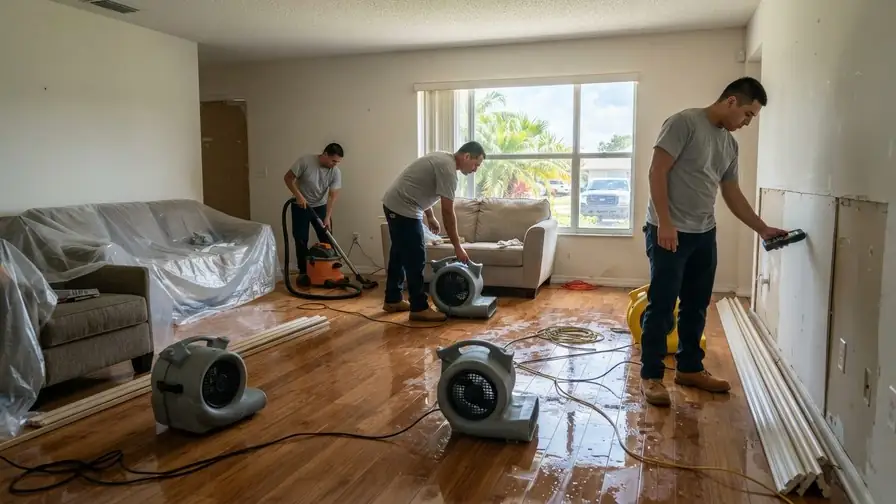
Central Florida sees its share of heavy storms, especially during the Atlantic hurricane season from June through November. When water gets inside, the first few days matter a lot. Acting quickly to dry the space is the best way to keep a water problem from turning into a mold problem.
Official source
Cleanup and drying tips for water-damaged homes are in the EPA mold and moisture guide.
How long after water damage does mold start growing?
Mold can begin growing on damp materials in just a few days, depending on temperature and the material. That is why drying in the first day or two is so important after a leak or storm.
Related service >>
- Emergency Mold Remediation in Lakeland, FL
Safety First, Then Stop the Water
Before anything else, make sure the home is safe. If water has reached outlets or the electrical panel, keep clear and have the power shut off. Avoid sagging ceilings, which can hold a surprising amount of water. Once it is safe, stop the source if you can: shut off the main water valve for a plumbing leak, or put a tarp over a roof opening if it can be done without climbing in bad weather.
Move furniture, rugs and valuables out of the wet area, and prop up furniture legs on blocks or foil to protect them from wet carpet.
Document Everything
Before cleanup, photograph and film the damage, including the water line on walls, wet flooring and any damaged belongings. If you plan to make an insurance claim, phone your insurer early and ask what they require. Keep receipts for any supplies, equipment rentals or emergency repairs.
Write down when the water got in and when you discovered it. That timeline helps both the insurer and any provider understand how long materials were wet, which affects what can be dried in place and what should be removed.
Dry Fast and Remove What Cannot Be Saved
Mold can begin growing on damp materials in just a few days, so drying speed matters. Open windows if outdoor air is drier, run fans and dehumidifiers and remove standing water with a wet vac. Pull up wet carpet pad, which rarely dries well and is cheap to replace.
Drywall and insulation that soaked up water, especially from floodwater, usually need to be cut out. A water damage or mold provider can bring commercial air movers and dehumidifiers, map moisture in walls and floors and tell you which materials can be dried and which should go. They should record moisture readings until everything is back to normal.
Getting Ahead of Mold
Most mold problems after a storm start with materials that stayed wet too long. Taking these steps in the first day or two, and getting professional drying for larger losses, gives your Lakeland home the best chance of avoiding mold altogether.