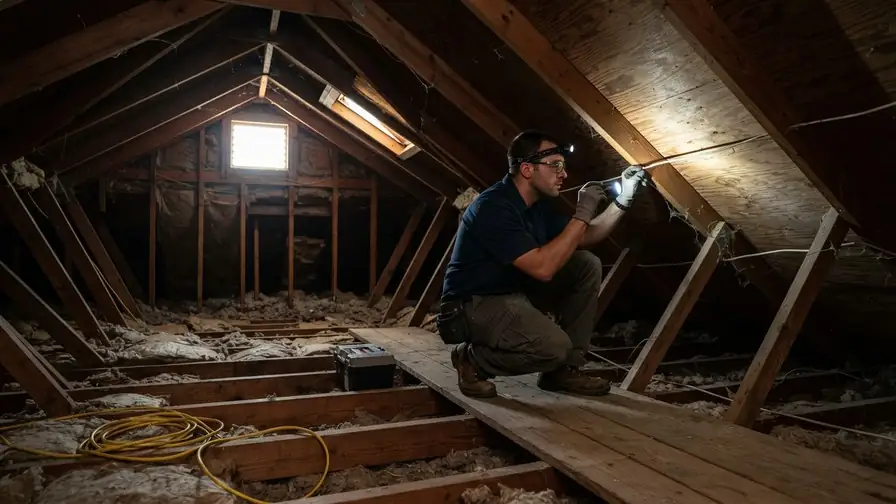
Attics are out of sight, so mold there often goes unnoticed until a roofer, a home inspector or a curious homeowner pokes a head through the hatch. If you have seen dark staining on the underside of your roof decking, this checklist will help you sort out what you are looking at and what to do next.
Is attic mold dangerous to my family?
Attic mold is separated from living spaces, but air can move between the attic and the house through gaps around lights, vents and the hatch. Large growth should be addressed, and anyone with health concerns should talk to a doctor.
Related service >>
- Attic Mold Remediation in Lakeland, FL
What Attic Mold Usually Looks Like
Attic mold most often shows up as dark gray or black staining on the plywood or OSB roof decking, usually on the north-facing side or near the bottom edge of the roof. It may look like a spreading shadow rather than fuzzy spots. You may also notice a musty smell, damp or matted insulation, rusty nail tips poking through the decking or water stains on rafters.
Not every stain is active mold. Old water marks from a repaired leak can look similar. A moisture meter reading on the decking helps tell whether the problem is current or left over from years ago.
The Common Causes in a Florida Attic
Roof leaks are the obvious culprit, especially after heavy summer storms. But many attic mold problems come from humid air instead. Bath and kitchen fans that exhaust into the attic rather than outside dump moisture right under the roof. Blocked soffit vents, often covered by blown insulation, cut off airflow. Leaky ductwork or an air handler in the attic can sweat and drip.
Check these items in order:
- Any signs of active roof leaks or flashing problems
- Exhaust fans that end in the attic instead of outside
- Soffit vents blocked by insulation
- Ducts or air handler sweating or dripping
- Gaps letting house air into the attic
Fixing the Cause, Then the Wood
The cause gets addressed first: repair the roof, reroute fans to vent outdoors, clear soffit vents with baffles and seal air leaks from the house. Then the affected decking is cleaned. Depending on the extent, that can mean HEPA vacuuming and wiping, sanding or soda blasting, followed by drying. Badly damaged decking may need replacement, which ties into roof work.
Wet or moldy insulation usually comes out and is replaced once the space is dry. Containment in an attic is often simpler than in a living area, but the provider should still protect the hatch and keep debris from falling into the house.
Do Not Ignore the Hatch
A quick look into your attic once or twice a year, especially after storm season, can catch problems early. If you find dark staining or damp insulation in your Lakeland home, have an independent provider check moisture levels and find the cause before deciding on cleanup.