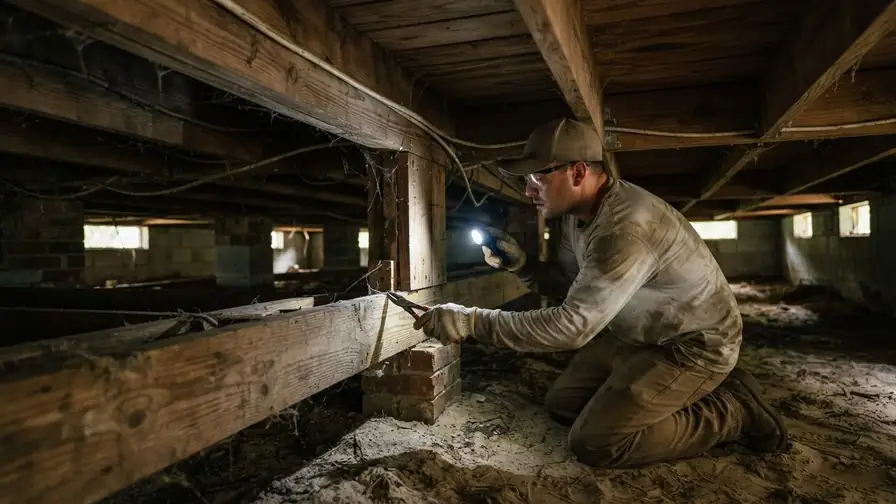
Most newer Central Florida homes sit on slabs, but many older houses, including plenty in Lakeland's historic districts, are built on raised floors with a crawl space underneath. Those spaces can be prime territory for mold, and the reasons are a little counterintuitive.
Should crawl space vents be open or closed in Florida?
In humid climates, open vents can let in warm, moist air that condenses on cooler wood. Many experts now favor sealing and conditioning crawl spaces, but the right approach depends on the house. A provider can recommend a plan based on moisture readings and drainage.
Related service >>
- Crawl Space Mold Removal in Lakeland, FL
Condensation, Not Just Leaks
Crawl spaces in older homes usually have vents to the outside. The idea was that airflow would keep the space dry. In a humid climate, though, the outdoor air that drifts in during summer is warm and loaded with moisture. When it meets the floor joists and subfloor, which are cooled from above by air conditioning, the moisture condenses on the wood.
Over a long humid season, that steady dampness is enough to grow mold on joists, beams and the bottom of the subfloor, even with no plumbing leak at all. Bare soil under the house adds more moisture as it evaporates, especially after heavy rain.
Signs Something Is Wrong Below
Crawl space mold rarely shows itself directly, since few people crawl under their homes. Watch for a musty smell that is stronger near floor vents or in rooms over the crawl space, floors that feel soft or bouncy, cupping in wood flooring and higher indoor humidity even with the AC running.
A provider will go under the house with a flashlight and a moisture meter, checking the wood moisture content, looking for visible growth and checking for standing water, torn vapor barrier, disconnected ducts or plumbing drips. Photos from under the house help you understand what is going on without crawling in yourself.
Cleanup Plus Moisture Control
Cleaning the framing is only half the job. Affected wood is typically HEPA vacuumed, scrubbed or sanded, and treated as needed, with badly damaged pieces replaced. Insulation that has absorbed moisture or grown mold usually comes out.
The lasting fix is moisture control. That might mean a heavier vapor barrier over the soil, sealing off outside vents and conditioning the space, adding a dehumidifier, fixing drainage that sends rainwater under the house or repairing leaky ducts that sweat. Without one of these, the same conditions will return the next summer and the mold will follow.
A Dry Crawl Space Is a Healthier House
Air from the crawl space moves up into the living areas, so what happens under the floor affects the whole home. If you have an older raised house in Lakeland or nearby, an inspection of the crawl space can catch problems early and point to the moisture fix that keeps mold from coming back.