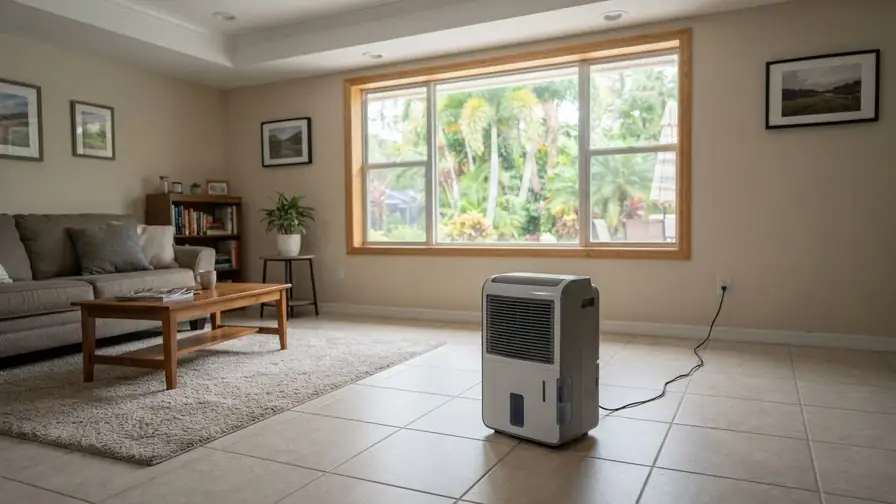
Florida is not known for basements, and most homes in the Lakeland area are built on a slab. But some houses on sloped lots have partial lower levels, sunken living rooms or finished garages and storage rooms that sit at or below the surrounding ground. Those spaces trap moisture in much the same way a northern basement does.
Do Florida homes have basements?
Most do not, because of the high water table and sandy soil. Some homes on sloped lots have partial lower levels or sunken rooms, and those spaces can trap moisture much like a basement in other parts of the country.
Related service >>
- Basement Mold Removal in Lakeland, FL
Why Low Spaces Stay Damp
Water moves toward the lowest point. Rooms that sit below or right at grade collect moisture from the soil through the concrete, from rainwater that drains toward the house and from humid air that settles in cooler spaces. Concrete is porous, so even without a visible leak, moisture can wick through the slab or walls.
In a humid climate, the cooler air in a lower room can also cause condensation on walls and floors, especially if the AC is not reaching the space well. Carpet, drywall and stored cardboard boxes in these rooms are easy places for mold to start.
Stop the Water Before Anything Else
Before any cleanup, the provider will look at how water reaches the room. That includes grading around the house, gutters and downspouts, any sump pit and pump, cracks in walls or slab and plumbing that runs through the space. Sometimes the fix is as simple as extending downspouts or regrading soil away from the foundation. Other times it involves sealing cracks, improving drainage or adding a dehumidifier.
Measuring moisture in the slab and lower walls helps show where water is coming from. Without addressing it, new finishes will simply grow mold again.
Removal and Drying in Lower Levels
Cleanup follows the usual steps: contain the area, remove wet or moldy carpet, pad and drywall, often cutting drywall a foot or more above the highest visible damage, and clean the framing and concrete. Air movers and a dehumidifier then run until readings are normal.
When rebuilding, materials matter. Many homeowners choose tile or vinyl over carpet in lower rooms, and some use moisture-resistant drywall or leave a small gap between drywall and the slab. A dehumidifier set to keep humidity below about 50 percent helps prevent the problem from coming back.
Low Rooms Need Extra Attention
If your home has a sunken or partly below-grade room that smells musty or shows damp spots, have it inspected. Fixing drainage and humidity is often the most important part of the job, and an independent provider can help you plan both the cleanup and the prevention.